
Many people straighten teeth with Invisalign, and Merriam-Webster defines an aligner as a clear, plastic orthodontic appliance. Align Technology founder Zia Chishti conceived of the basic design of Invisalign while he was an adult orthodontic patient. Clear aligners skip brackets and wires, and at Shirley Santos DMD Inc. in Tustin, treatment starts with a digital scan.
Invisalign

Meet Dr. Shirley Santos
Dr. Shirley Santos, DMD, has led her Tustin-based dental practice since 2011. She brings over two decades of dental experience to her patients. Dr. Santos earned her dental degree from the University of the East in Manila, Philippines, in 1999. She built her career in the Tustin and Irvine area and has formed long-term relationships with families across the region. She is a member of the American Dental Association and the California Dental Association.
She focuses on preventive care and nonjudgmental visits for every patient. She keeps learning through continuing education and explains each recommendation in clear language. Her care reflects what patients actually need, and she aims to give honest advice at every appointment. She values faith, family, and community, and she enjoys time with her husband, three children, and dog.
Conditions That Aligners Address
Crooked or crowded teeth affect more than your smile. Crowding, gaps, overbites, underbites, and crossbites can make cleaning harder, cause uneven wear, and lead to jaw discomfort. Clear aligners can correct these problems by gradually moving teeth. Bite problems are common, with clinically meaningful ones affecting about two-thirds of untreated US adults.
Recognizing the Problem
Alignment changes often happen slowly, so many people get used to them without noticing. That is normal, and it does not mean you did anything wrong. A national study of untreated adults found that crowding increases most during early adulthood.
Signs You May Notice
You may recognize some of these signs:
- Floss catches or shreds between certain teeth.
- One side of your jaw feels tired after meals.
- The front tooth looks more rotated than before.
- Your bite feels different when you close your mouth.
When Should You Seek a Professional?
Waiting for symptoms to get worse can lead to more complex treatment later.
Consider an evaluation in these situations:
- You have pain or trouble chewing.
- Your teeth look more crowded each year.
- Your teeth suddenly meet differently.
- You are thinking about trying an at-home fix first.
- Your child or teen has crowded or crooked teeth.
Harvard School of Dental Medicine stresses the value of an orthodontic check-up as soon as possible for children and teens. Dentists can treat many alignment problems at any age, so it’s never too late for adults.
An earlier visit gives you more choices.
How the Treatment Process Works
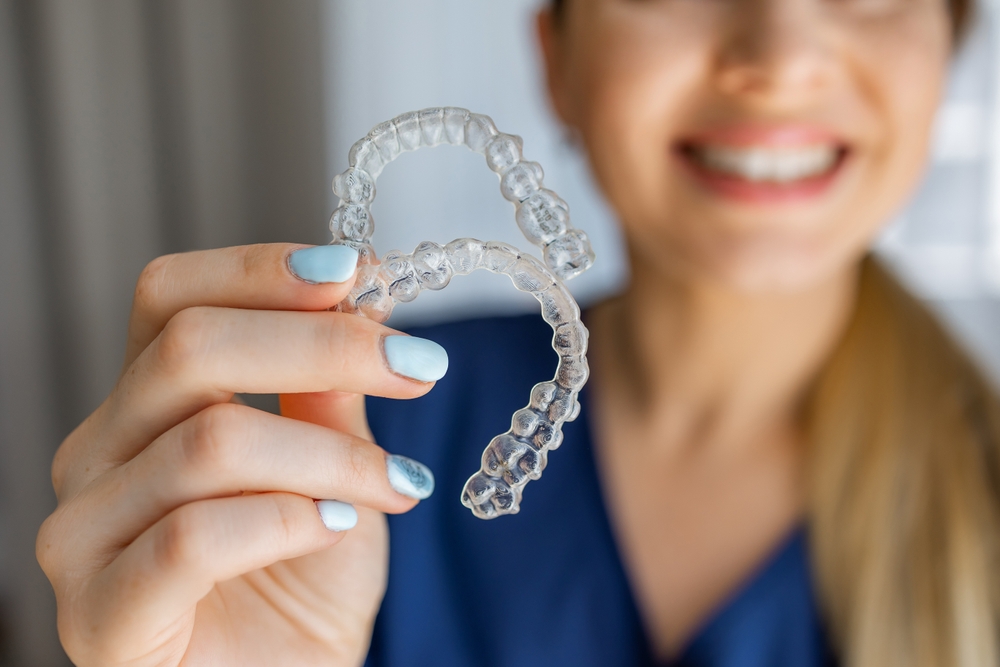
This care has three parts: the aligners, the retainers, and the digital scan. Together they cover planning, active treatment, and keeping your results. Each section below explains what the part is and what it does.
Oral Hygiene During Orthodontic Treatment
Orthodontic treatment requires more oral care, not less. Plaque is a soft film of bacteria that forms on teeth every day. Aligners sit against your teeth for most of the day. Plaque and food under a tray stay in contact with enamel longer.
Routine checkups and professional cleanings let the team check your gums and remove calculus that brushing misses. A published review found that clear aligner treatment showed promising results in controlling plaque index and improving gingival health. Steady care at home and at the dental office supports those results.
Daily Care for Aligners
These daily habits protect your teeth during treatment:
- Take out your aligners before you eat.
- Brush your teeth before you put your aligners back in.
- Floss once a day to clean between your teeth.
- Clean your aligners as your dental team directs.
- Put your aligners in their case when you take them out so they don’t get lost or damaged.
Gum health matters because healthy gums hold your teeth in place while they move. Rough spots or cracks on a tray can hold bacteria, so tell your team if a tray looks worn. Also tell your team if your gums feel tender or bleed when you brush.
At-Home Fixes People Try First
When crowding or gaps bother you, people often start online looking for a faster or cheaper fix. Cost is a common reason.
A published analysis of consumer interest found that people sought DIY aligners because they were cheaper.
DIY Aligner Kits and Mail-Order Trays
Mail-order kits send trays to your home with little or no in-person care. Many skip the clinical exam that checks your gums, roots, and bone. Some offer no dental professional to watch your progress.
The same analysis concluded that YouTube is not a reliable source of DIY aligner information for patients or the public.
Gap Bands, Rubber Bands, and String
These items show up often in online searches:
- Gap bands marketed as tooth-spacing tools
- Rubber bands placed around teeth
- Floss or string pulled between teeth
Whitening trays and occlusal guards bought without a prescription also circulate as alignment aids. Whitening trays do not move teeth, and a dental professional should check your bite before you use a guard.
What the Research Says
Teeth move because the bone around them slowly remodels. Without a plan that fits your roots and jaw, force can push teeth in harmful directions.
Research indicates that in one documented case, unsupervised rubber-band use caused rapid and severe bone loss. The patient wore them nightly for years to close a gap. An extraction and implants followed, along with pain and loss of function.
Results differ from person to person. Still, this case shows what unsupervised force can do. Dental teams use 3D CBCT imaging for precise planning because roots and bone aren’t visible on a visual exam.
Protecting Cosmetic Work You Already Have
If you already have cosmetic procedures, the same habits protect your results. Bonding material and veneer edges can stain and wear over time.
Cost and Insurance
Knowing typical costs before your first visit helps you plan. Many dental insurance plans include at least partial orthodontic coverage, which can lower your out-of-pocket costs.
Industry Average Pricing
Clear aligner prices vary from case to case. One national cost source that uses ADA fee survey data lists the typical US range as 3,415-8,965. These figures are industry averages, not pricing at any specific practice, and the source updated them in May 2026.
Clear aligners often cost more than metal braces, although the gap depends on your case. Direct-to-consumer aligners often cost less, yet they skip in-person oversight.
Contact the team to verify exact plans and rates for your case.
What Changes the Price
These factors commonly change the final price:
- How complex your case is
- How many aligners your treatment needs
- Whether you need refinement aligners
- Whether the quote includes retainers
- Whether you need dental work first, such as fillings or gum treatment
- Your location and the type of provider
Quotes bundle costs in different ways, so ask what your quote covers.
Understanding Your Coverage
Orthodontic benefits vary by plan, even within one carrier, so the details matter. Some plans treat clear aligners like braces, while others set different rules.
What to Check in Your Plan
Check these items in your plan before you start:
- Whether your plan includes orthodontic benefits at all
- Whether adults qualify for coverage
- The lifetime orthodontic maximum
- The percentage your plan pays
- Any waiting period before benefits begin
Your carrier can tell you which benefits apply to you, and your employer’s benefits office can share your plan documents.
Common Insurance Providers
Dental coverage usually comes from an employer group plan or an individual plan you buy yourself. A discount dental plan isn’t insurance; it offers reduced fees instead of benefits. Contact the team to verify your coverage and eligibility before you assume what your plan pays.
FAQs
How much does cosmetic dentistry cost?
The cost depends on the treatment you choose and how many teeth it involves. Materials, lab work, your location, and the number of visits also affect the price. A written estimate lists each step, so you can see what the price covers. Ask for one at your initial consultation before you decide.
What is considered cosmetic dentistry?
Cosmetic dentistry covers treatments that mainly change how your teeth look. Common examples include teeth whitening, dental bonding, and veneers. Straightening teeth with clear aligners can also count, since it changes your smile. Some treatments also improve how your teeth work, so a dentist can explain which goals each one meets.
Is cosmetic dentistry worth it?
It can be worth it if the treatment matches your goals and your budget. Some people want a brighter smile, while others want straighter teeth that are easier to clean. Think about how long the result lasts and what upkeep it needs. Ask your dentist what results to expect and what happens if you wait.
Can cosmetic dentistry fix an overbite?
Sometimes, but it depends on how severe the overbite is and what causes it. One review found aligners worked well for mild to moderate crowding, while overbite correction still seems to be limited. A dental exam shows how your teeth meet and which options may help. Ask your dentist what result to expect in your case before you start.
Does Invisalign hurt?
You may feel mild pressure or soreness, mostly when you start treatment or switch to a new tray. One review found that aligner patients felt less pain than braces patients during the first few days of treatment. The review found no difference after that, up to three months. Tell your dentist if soreness lasts or feels sharp.

