
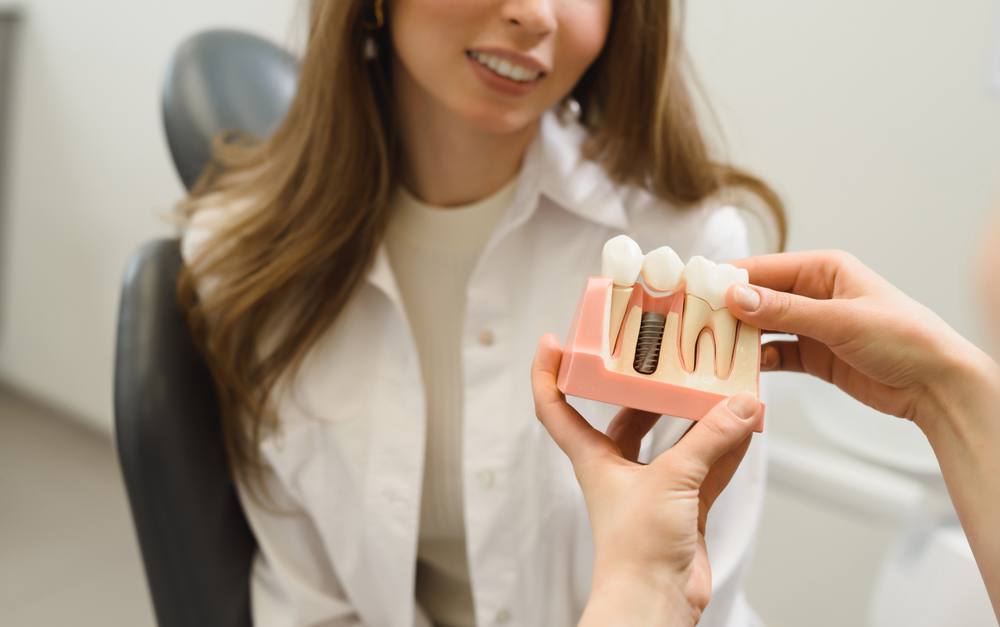
Today, dental implants are permanent devices that replace both the roots and teeth you lose to decay, injury, or disease. In 1965, Swedish researcher Per-Ingvar Brånemark, who coined the term osseointegration, placed implants in the first human patient. Dr. Shirley Santos of Shirley Santos DMD Inc. in Tustin explains how implants work so that you can weigh your options.
Dental Implants


Meet Dr. Shirley Santos
Dr. Shirley Santos, DMD, earned her dental degree from the University of the East in Manila, Philippines, in 1999. She has practiced in the Tustin and Irvine area since she opened her practice in 2011. She brings over two decades of clinical experience to her patients. She is a member of the American Dental Association and the California Dental Association.
Her care centers on listening to patient concerns and recommending only what is clinically necessary. She uses diagnostic tools to support evidence-based treatment planning. She is passionate about preventive care and keeps up with continuing education. Her goal is to create positive visits without judgment. Outside the office, she values faith, family, and community. She enjoys time with her husband, three children, and dog.
Conditions, Symptoms, and Pain Associated With Tooth Loss
Tooth loss affects more than your smile; it can make chewing difficult, shift teeth, and change your bite. Slow bone loss can follow, which may change your speech, face shape, and daily comfort. Implants replace both the root and the crown, restoring function at a structural level. National data show that complete tooth loss among adults aged 65 and over was 12.9% in 2015 to 2018.
Recognizing the Problem
Many people live with tooth loss for years and adjust without noticing. Small daily habits can hide how much has changed.
Changes in Chewing and Bite
Changes in chewing and bite often show up first. These everyday signs may sound familiar:
- You chew on one side to avoid a gap.
- You skip foods that feel hard to bite.
- Your bite feels different than it used to.
- Your teeth look like they are shifting.
A tooth root sends pressure into the jawbone, and that pressure helps keep the bone strong. When a root is gone, the bone can slowly shrink.
Denture Fit and Comfort
Dentures rest on gum tissue, so they can move as the bone underneath changes. You may notice slipping when you talk or eat. Your gums may also feel sore under a denture.
If these signs sound familiar, you are not alone. Peer-reviewed consensus literature notes that many patients have difficulties adapting to their dentures.
Bone Changes Without Pain
Bone loss under your gums usually does not hurt at first. Changes that affect whether you can get an implant can progress before you feel discomfort.
Dental imaging at a visit can show bone changes that you cannot feel.
When Should You Seek a Professional?
You do not need to wait for pain to ask about tooth replacement. Early evaluation can protect the bone that supports an implant.
These situations call for a professional evaluation:
- A tooth your dentist calls non-restorable.
- Dentures that feel loose or leave sore spots.
- Repeated infections around the same tooth.
- A gap you have lived with for months or years.
- Trouble chewing foods you used to enjoy.
Waiting lets bone shrink, which may require additional steps, such as bone grafting, before treatment starts.
Timing matters because research shows bone changes after tooth loss are most pronounced in the first 3 months.
An early visit gives you more information and more choices.
Implant Services and How They Work
Implant care includes several services, each solving a different problem. After an evaluation, your provider matches the service to your mouth.
Prevention and Hygiene Habits That Support Implant Longevity
Good oral health before and after treatment plays a major role in long-term success. Brushing, flossing, and regular cleanings lower the bacteria around your teeth and implants.
Daily Care at Home
These daily habits protect your mouth:
- Brush twice a day with a soft-bristled brush.
- Clean between your teeth once a day.
- Replace your toothbrush every three or four months.
- Eat a balanced diet with fewer sugary snacks.
- Ask your provider for help if you smoke.
Gum health matters because gums hold teeth and implants in place.
Professional Care and Risk Factors
Professional cleanings reach areas that brushing and flossing can miss. Dental teams also check your gums and bite at each visit, so they can catch small problems early.
Smoking, diabetes, and gum disease can affect healing, so your provider needs to know about them before planning treatment.
When many teeth fail or go missing, healthy gums and good habits matter even more. The American Dental Association notes that good oral hygiene can prevent most dental diseases.
Over-the-Counter Products and What They Can’t Do
Many people try at-home products when a tooth is missing or a denture feels loose. These options are easy to find, so people often try them first.
Adhesives and Repair Kits
Common choices include:
- Denture adhesives that hold a denture in place
- Temporary tooth replacement kits
- Do-it-yourself denture repair products
These products may ease movement for a short time. They do not rebuild the bone that tooth loss changes. Using adhesive to steady a denture treats a symptom, not the cause. A 2020 peer-reviewed survey of 1,470 denture wearers found that complete denture wearers are more likely to use denture adhesives.
Delaying Care
Delaying a visit is another common choice. Some people wait because they feel no pain, or hope a home fix will last.
Temporary kits can also hide how much your teeth or dentures have changed. That makes it harder to notice when something needs attention. Popular products may bring short-term comfort, yet they cannot replace a clinical evaluation.
What the Research Says
Home products can change how a denture feels, but they cannot measure your bone. Judging whether you have enough bone for an implant takes clinical imaging.
Imaging helps a provider check:
- How much bone you have
- How dense and strong that bone is
- Where nerves and sinuses sit
- Which implant position fits best
A visual exam cannot show jaw anatomy in the same detail. Research indicates that standard two-dimensional X-rays have limitations, such as distortion and magnification.
These details matter most for larger plans and complex cases, where bone or anatomy makes planning harder. Careful planning starts with accurate bone information.
Cost and Insurance for Dental Implant Treatment
Many dental plans cover part of implant care, and industry financing options can spread costs over time. You can contact the dental team directly to learn how costs apply to your plan.
Industry Average Pricing
The numbers in this section are industry averages and general benchmarks. They do not reflect the pricing at any specific dental practice. Your cost depends on your clinical needs, your location, and your insurance.
Contact a dental team directly to verify the exact costs for your own treatment plan.

FAQs
How much are dental implants?
The price depends on how many implants you need and what each one supports. Bone grafting or tooth extraction may require additional steps. Your provider can use 3D CBCT imaging to see whether you need grafting first. The pricing section above shows one industry range, so ask for a written estimate.
How long do dental implants last?
Implants are designed to last a lifetime, but how long yours lasts depends on your health. Smoking can slow healing and lower long-term success, and uncontrolled diabetes can raise infection risk. Daily cleaning and regular checkups also matter, so schedule both. Tell your provider if an implant feels loose or painful.
Do dental implants hurt?
Yes, one university oral surgery handout says you may experience mild to moderate pain after the local anesthetic wears off. Swelling and bruising are also normal in the first days. Ask which pain medicine fits your health. Call the office right away for extreme pain or bleeding that does not stop.
Are dental implants safe?
Implants are an FDA-regulated treatment with significant benefits, but complications can occur. Risks include infection, numbness from nerve damage, and injury to nearby teeth. Your overall health helps decide whether you are a good candidate, so share your history. Ask your provider about each risk before you decide.
Why no dairy after dental implant?
Not every provider tells you to avoid dairy, so follow your surgeon’s plan. Written diet plans usually start with soft foods for the first few days. Ask which dairy foods, if any, you can eat, and when to restart. Tell your provider about any food allergy or nausea.

