
Removable dentures are artificial replacements for one or more teeth that restore chewing and appearance. The practice began in the 7th century BC, when Etruscans in northern Italy made partial dentures from natural teeth. Shirley Santos DMD Inc. uses this definition to explain how a complete set differs from a partial one.
Dentures
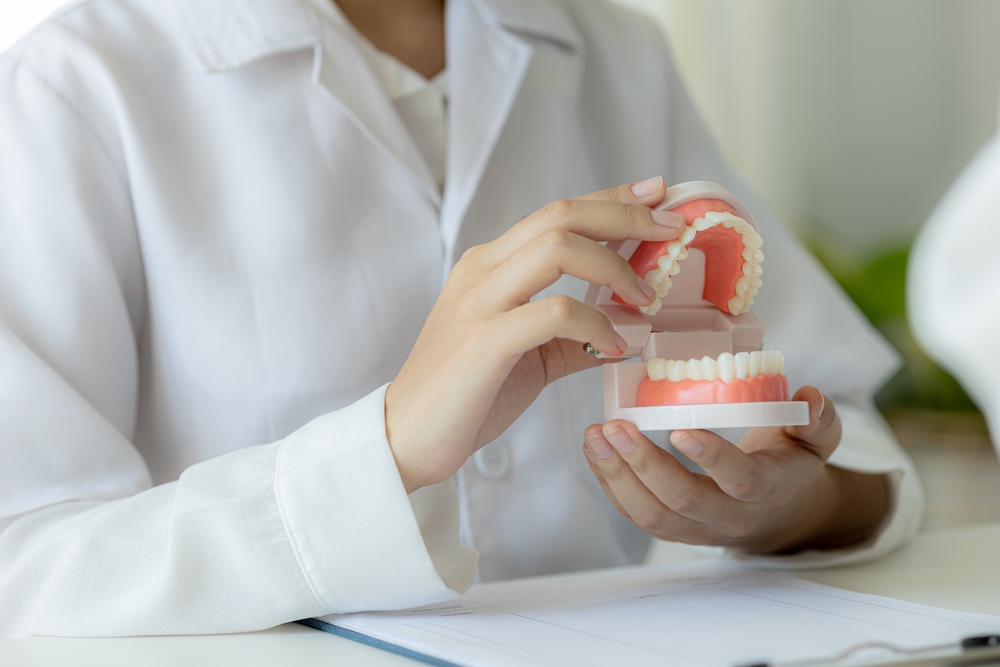

Meet Dr. Shirley Santos
Dr. Shirley Santos, DMD, owns and leads Shirley Santos DMD Inc. She has served patients in Tustin, CA, and nearby Irvine, Santa Ana, and Garden Grove since 2011. Dr. Santos earned her dental degree from the University of the East in Manila, Philippines, in 1999. She has more than 20 years of experience in preventive, restorative, and prosthetic dental care. She built her career in the Tustin and Irvine area.
Dr. Santos is a member of the American Dental Association and the California Dental Association. She listens to patient concerns, explains options clearly, and keeps her recommendations no-pressure. She recommends only what a patient truly needs and continues her education to maintain high-quality care. Her philosophy centers on preventive care and a positive, nonjudgmental experience. Outside work, she values faith, family, and community.
Conditions, Symptoms, and Pain Associated with Tooth Loss
Decay, gum disease, injury, and bone loss can each leave you with too few teeth to chew well. Remaining teeth may drift into gaps, changing your bite and adding pressure. Your jawbone can lose density where roots once sat, and your face may change shape. A removable prosthetic restores chewing, and about 15% of U.S. seniors 65 and older have no remaining natural teeth.
Recognizing the Problem
Many adults live with tooth loss for years because it happens slowly. Tooth loss is among the most common causes of reduced chewing ability. That means these changes are common, and treatment options are available. A dentist can explain which changes matter most for your situation.
Common Signs to Notice
Missing back teeth mostly affect chewing, while missing front teeth mostly affect speech and looks. Watch for these common signs:
- Trouble chewing certain foods
- Nearby teeth that shift toward a gap
- Upper and lower teeth that meet in a new way
- Speech that sounds different than it once did
If you notice any of these signs, a clinical evaluation can show what is happening. The visit usually includes an exam of your gums, remaining teeth, and bite. None of these signs means you waited too long.
When Should You Seek a Professional?
The window for restorative options narrows over time. After teeth come out, the supporting bone slowly shrinks over months and years. Bone volume helps determine whether a prosthetic fits well or whether implants are possible.
Consider a professional visit when you notice:
- A missing tooth that no one has replaced
- A prosthetic that feels loose
- Trouble eating foods you used to enjoy
- Teeth that move after a gap forms
- A sore spot that lasts longer than 3 weeks
- A cracked or broken prosthetic
A broken prosthetic irritates the tissue, so don’t wait to repair it.
An early visit lets a dentist check bone levels with digital X-rays or 3D CBCT imaging. A systematic review of extraction sites found rapid reductions in ridge size in the first 3- 6 months. Your dentist can then decide whether bone grafting or other steps should come first.
Types of Dentures
Both types are removable, with artificial teeth set in a gum-colored base. Most bases use acrylic because it closely resembles gum tissue. Your type depends on how many natural teeth remain in each arch.

Prevention, Oral Hygiene, and Maintaining Dental Health
Decay and gum disease are leading causes of tooth loss, and steady habits help prevent both. CDC guidance recommends at least one dental checkup and professional cleaning each year. Oral disease may cause no pain until it reaches a later stage, so routine exams matter. Check-ups also give you time to discuss your own risks.
Daily Habits for Teeth and Gums
Between visits, home care matters, and professional cleanings remove buildup that brushing misses.
These daily habits protect your teeth and gums:
- Brush twice a day with fluoride toothpaste, and brush your tongue too
- Clean between your teeth every day with floss or small brushes
- Limit sugary foods and drinks
- Avoid tobacco
Sugar feeds the germs that cause decay, so limiting it protects your remaining teeth. Tobacco raises your risk of gum disease and tooth loss.
If gum disease reaches below the gumline, scaling and root planing removes bacteria from the root surface. This gives the gum tissue a chance to reattach and settle.
Caring for a Removable Prosthetic
If you wear a removable prosthetic, prevention looks different. Plaque and tartar build up on it like on natural teeth. Clean it every day with a soft brush, soap, and water. Toothpaste can be too harsh. Rinse it after meals to clear food debris.
A prosthetic can break if you drop it while cleaning, so work over a folded towel. Removing it at night gives your gum tissue time to recover.
Poor cleaning and overnight wear raise the risk of stomatitis, an inflamed gum condition under the base.
Your gum tissue changes over time, so routine checkups matter for fit. A dentist can monitor tissue health, catch pressure sores early, and adjust a prosthetic that rubs one spot.
Consistent care protects your remaining teeth, gums, and prosthetic.
Popular Home Remedies for Tooth Loss and Denture Discomfort
Many people try over-the-counter products or home fixes between dental visits. These options aim to keep daily chewing and speaking comfortable.
Common At-Home Options
Common choices include:
- Adhesive creams, powders, or strips, which improve hold when a prosthetic feels loose
- Saltwater rinses, which soothe irritated gums after a new fit
- Reline or repair kits, which try to rebuild a snug fit with materials you apply yourself
Mild saltwater is gentle, but it does not treat the cause of the soreness.
Some people use these options to avoid an extra appointment. One hospital dental survey found that about one in three patients had tried denture adhesive.
What the Research Says
Research indicates that adhesive can temporarily stabilize a loose prosthetic. It cannot fix the usual cause: bone shrinking under the base. Relying on it can delay a needed reline and create uneven pressure on the gums.
Research also links at-home repair kits to a documented risk of prosthetic damage and tissue injury. Research and FDA labeling guidance indicate that wearing an improperly repaired prosthetic may accelerate bone resorption.
Persistent fit problems call for a professional reline, rebase, or full evaluation. Clinical studies indicate that a better fit improves chewing comfort.
Cost and Insurance for Dentures
Most dental insurance plans cover at least part of the cost of a removable prosthetic. Coverage varies by plan type, annual maximum, and waiting period, so checking early helps you plan.
Industry Average Pricing for Dentures
Fees differ from one office to the next, so national averages give you a starting point. In most cases, the price covers impressions, the custom prosthetic, and early adjustments.

FAQs
How much are dentures?
The price depends on the type, the materials, and any prep work you need first. Many offices quote prices per arch, so a full upper and lower set costs more. National industry averages, listed above, give you a starting point. Ask the dental team for a written estimate before treatment starts.
How to care for dentures?
Clean your prosthetic every day and take it out at night. Use a soft brush with soap and water, and rinse it after meals. Brush your gums and tongue too, since plaque builds up there. Store it in water overnight, and ask your dentist about any loose fit or sore spot.
What are dentures made of?
Most are made from acrylic, a hard plastic that closely resembles gum tissue. Artificial teeth are made of acrylic or porcelain, depending on the design. Partial dentures often use a metal or flexible framework that clips onto your natural teeth. Ask your dentist which materials best suit your bite and daily comfort.
How long do dentures last?
Lifespan depends on how your gums and jawbone change, not on a fixed date. One health technology review found no evidence-based guidelines on how often to reline or rebase. Regular checkups show when a reline or a new set helps. Call your dentist early if the fit loosens, sores appear, or the base cracks.
Can you eat with dentures?
Yes, you can eat with a well-fitting set, and chewing improves. One review noted that improvement doesn’t restore normal chewing ability compared with natural teeth. Start with soft foods cut into small pieces, then add firmer foods as you adjust. Chew on both sides, and tell your dentist if any food causes sore spots.

